Planning an open mind
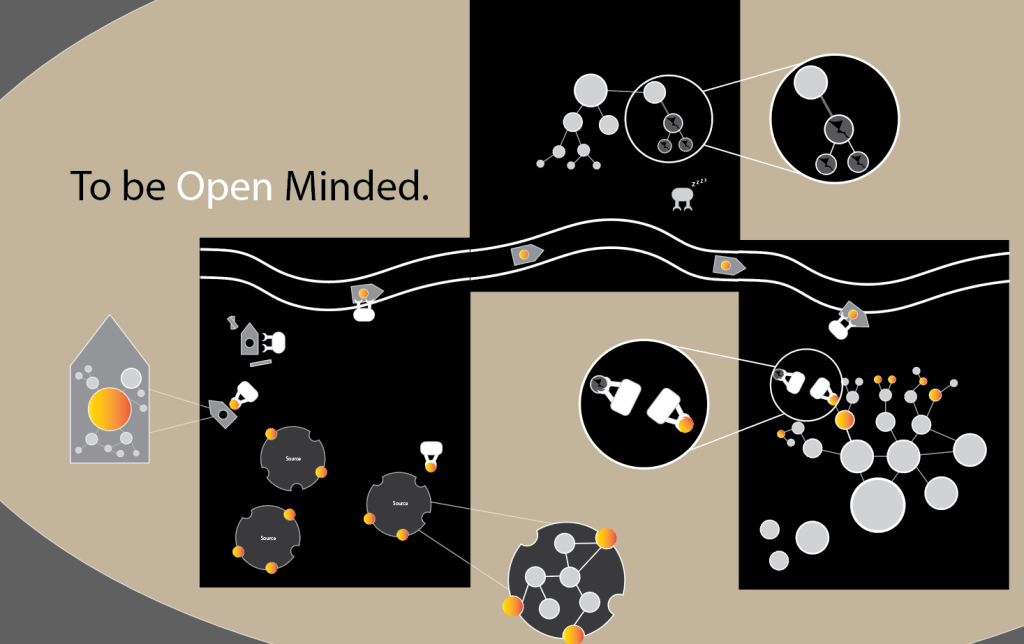
Humans have been telling highly detailed stories as far back as 30,000 years ago, in the caves of Lascaux and Chauvet in France.
We’ve used drawings and eventually language to craft compelling narratives about the nature of reality. These stories extract emotionally-significant events and patterns (symbols) from prior experiences into repeatable explanations.
We often think of information as being fixed, however this isn’t the case. Information is in a constant state of flux, being formed, broken down, and reformed as something more useful.
Information is literally in-formation.
Each internal reformation of our set of explanations increases their usefulness, allowing them to cater to a new use case.
Wisdom
Explanations that are both useful and easily transferable are distributed into the broader culture, eventually being synthesised into great artworks, books or films. The explanations that survive across generations make their way into tradition, with the most valuable ones being classed as “wisdom”. The job of older generations is to pass down this wisdom to the next. Initially this teaching process was administered by elders in the form of stories, eventually morphing into the current education system.
One purpose of the education system is to select and transfer the set of explanations that would allow a child to most effectively integrate new and improved explanations into their understanding of the world.
This is the essence of an open mind.
Part of the reason behind cultivating this is to allow for the creation of explanations about the consequences of actions. Doing so enables the child to develop a relationship with their future self, and begin forming plans.
Plans
Plans are essentially behaviour-based stories that attempt to connect present action with future reward. They allow individuals to bring about a reality more aligned with their personal values, and are ultimately the fuel for all large-scale human achievement.
But, plans don’t come from nowhere.
They have their roots in ideas. Those flashes of brilliance that seem to emit a gravitational force of their own. The stimulus around us mixes with our own mental construction of how the world works, and ideas spring from this rich habitat. These ideas begin to layer themselves on top of one another, providing guidance on how we could achieve a desired outcome. Once these ideas are organised in a sequence, they form a plan. This plan can then be used as a blueprint to guide daily action towards a goal.
There’s just one slight issue – not all ideas are “good”, meaning that the downstream plans that are formed do not produce their intended outcome. If new explanations are not added to rectify weaknesses in the plan, the plan eventually fails.
To minimise the chances of failure, we would like to start from a position of strength. Building plans using good ideas is obviously preferable than the alternative, so it warrants discussion about what a “good idea” even is.
For an idea to be considered “good”, the idea must be aligned with;
- Reality
- Your values
Executing ideas aligned with your values (but not reality) results in faulty plans. Executing ideas aligned with reality (but not your values) results in high-quality plans that don’t achieve anything you care about. We cannot deny our own values, and we cannot deny reality.
Since good ideas are the foundation of good plans, and good plans are required to get what you want out of life, the question is;
How do we have as many good ideas as possible?
Put simply, we build a mental habitat that attracts good explanations and repels bad ones. From this mental utopia good ideas will become the default, as all underlying assumptions surrounding an idea will be nestled in good explanations. Better explanations about the world result in more durable ideas, and these ideas become the plans that determine our life.
This is the definition of an open mind.
Being open minded isn’t just about being receptive to new ideas. It isn’t enough. Lots of new ideas are low-quality or downright dangerous. We must go beyond the simplicity of trait openness and extend the mental habitat to embody something else entirely.
What’s actually needed is a system for evaluating and transmuting information into an ever-expanding map of reality. A system for processing the correct information from the correct sources, with the correct context, and integrating all of it into our mental models of how things work.
To start building this kind of system, we need a few rules of thumb. Rough guidlines that help us intiutively choose the right actions. In other words – “principles”.
Principles are multi-purpose guidelines that help convert an explanation into a set of actions. They are the bridge between the idea realm and the physical world. By determining the principles that allow someone to form better explanations, we can begin to understand what truly makes an open mind.
Principles of an open mind
There are a number of principles which appear universal in open-minded people. These principles include the following;
Principle 1 – New and varied explanations are being processed continually
New explanations come primarily from stories and past experiences. Often these stories are encased in “content”, which can transfer information asynchronously to the consumer.
The most commonly suggested medium is a traditional book, however the success of platforms such as YouTube, Spotify & Audible open up other avenues for knowledge consumption.
How an explanation gets to you matters far less than it’s actual substance.

When presented with information that doesn’t seem like it would integrate into your existing world view, the default reaction should be curiosity – not defensiveness. Consume diverse, trustworthy content that sparks deep curiosity.
Principle 2 – All communication channels have a high signal-to-noise ratio

Consider all the ways that new information gets to you. What percentage of this information is immediately applicable to your current plans?
Establishing communication systems that maximise useful, practical information ensures that the content you interact with day-to-day is actively fuelling the creation of an open mind.
Following your interests is theoretically a good method of doing this, however this is only effective if your interests are aligned with your most meaningful goals.Pursing non-meaningful interests is a quick route to fragmentation and a lack of focus. One method of determining if the goals are aligned is to ask yourself “If I was the best possible version of myself, would I continue to be interested in this particular thing?”.
Another common trap is consuming information mindlessly without connecting it to implementation. Falling into this habit means that you are provided with no real-world feedback to validate the ideas generated, often causing you to overestimate your abilities. Knowledge is contextual in relation to other knowledge, and this context can only come through experimentation with reality (i.e. experience). Seek channels that provide you with information that pertains to your current set of problems, and serve your higher goals.
Principle 3 – Explanations come from reliable sources
Reliable sources are essential for minimising the risk of poor explanations, especially early on in the learning process when you have less context. Early on, your mental models surrounding a topic are hugely foggy.
Poor explanations from unreliable explainers can quickly take root, as there are no foundational beliefs to refute them.
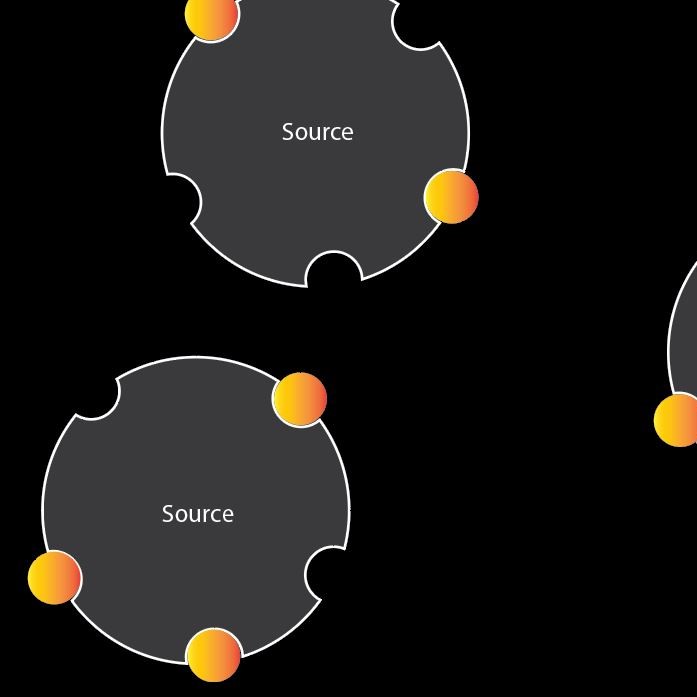
This mechanism explains why children are so impressionable, and why young people are susceptible to adopting half-formed belief sets from their favourite YouTube guru.
They simply lack the required supplementary explanations to refute any part of the provided explanation, so they begin to see the provider as infallible and the explanation as objective truth.
Principle 4 – Context is transferred with the explanation

“Context” is essentially all the connections necessary for integrating a new explanation in with your other explanations.
It gives you mental coordinates for where the next explanation should sit in your mind, and minimises the chance that the explanation transferred is misinterpreted.
The additional clarity from the provided context is necessary to change someone’s mind – they need to know exactly which pieces of their belief set you are trying to change, or they will assume you are trying to change ALL their beliefs and will shut off completely.
Assume that any explanation you hear that you disagree with sounds perfectly logical to the speaker, given their context. Try to understand what supplementary explanations the speaker is using, and attempt to extract out the part that they have gotten right (even if it isn’t explicitly what they say).
Principle 5 – Bad explanations are refuted, and good explanations are integrated
To refute a bad explanation, there are two methods. You can either;
- refute the validity of the evidence/assumptions, or
- refute the connection of the evidence to the conclusion.

To refute validity, an accurate explanation as to why the evidence is incorrect must be supplied. This explanation must fully explain all the facts outlined by the initial argument, and connect these facts to a different conclusion.
To refute connections, the logical structure of the argument must be dissected. To determine if an argument is logically incoherent, watch out for the following tactics;
- Ad Hominem Attacks: Attacking the character or personal traits of the person making the argument rather than the argument itself. For example, “You can’t trust Jane’s opinion on climate change; she’s an idiot”.
- Straw Man Arguments: Misrepresenting an opponent’s position to make it easier to attack. For example, “People who support healthcare reform hate freedom and want to control everyone’s lives”.
- Appeal to Authority: Arguing that a statement is true because an expert or authority said it, without any other supporting evidence. For example, “This famous actor says this product is the best, so it must be true”.
- Post Hoc Ergo Propter Hoc: This fallacy assumes that if one event follows another, the first must have caused the second. For example, “It rained after we did a rain dance, so the rain dance must have caused the rain”.
Refuting is one thing, but accepting an uncomfortable new belief can be just as hard.
Humans have a tendency of identifying with their beliefs, even bad ones. The more additional beliefs are integrated into incorrect root explanations, the more the root belief is solidified. As such, it is crucial to remember that you are not your beliefs. Treat them as servants, and dismiss them when they no longer serve you.
Development of an open mind
Traits can be defined as consistent patterns of behaviour observed over time.
We can break down all traits into their associated actions, and examine the actions to make the conversation practical. For example, let’s say you hold a particular trait-based belief about someone;
“John is disorganised”.
What does this actually mean?
It means that:
- John was late to work last week because he slept in.
- John joined a Zoom meeting with you Monday, and there was visible mess in the background.
- You asked John to send a document through to you Tuesday, and he mentions sheepishly that he doesn’t know where he saved it.
- Yesterday, you were CC’d on an email John sent to a client and there were obvious spelling errors in his message.
None of these behaviours alone would condemn John as disorganised in your mind, but the combination of these behaviours has created an association in your mind between John and a particular trait (disorganised).
This is a hugely practical concept, as it allows you to deconstruct traits down to a core set of activities, and develop habits that exhibit those behaviours. This means that within months you can transform any aspect of your identity, modifying both internal and external perceptions about yourself.
When we apply this concept to the trait “open-mindedness”, we can identify key behaviours that are associated with being open-minded. Validating these behaviours against the current scientific literature, we can plan actions that have shown evidence in building an open mind.
To minimise the mental energy spent on performing these actions, they must be encased in habits. Doing this moves the actions from the conscious to the unconscious mind, increasing the chance that they will be continuously employed in day-to-day life.
Principle 1 – New and varied explanations are being processed continually.
- Habit 1.1: Listen to an audio book during a quick 15min walk as soon as you wake up. It also helps maintain healthy vitamin D levels (Mol & Bus, 2011) (Hamer & Chida, 2008)
- Habit 1.2: Leave a book on your pillow just before you brush your teeth for bed, so that you regularly read before sleeping. To avoid distraction, charge your phone in a different room (buy a separate alarm clock).
- Habit 1.3: Utilise travel as a tool to experience other cultures and integrate new ideas about patterns of behaviour (Maddux & Galinsky, 2009).
- Habit 1.4: Switch listening to music for an interesting podcast while at the gym, or while you’re driving.
- Habit 1.5: Plan regular time with intellectually diverse friends. Book clubs, lunches, or other conversation-focused activities are ideal (Grant & Berry, 2011)
- Habit 1.6: Seek new experiences and hobbies that don’t draw on many previous skillsets you possess. This will force you to find new mental tools to properly engage with the activity (Dweck, 2006).
Principle 2 – All communication channels have a high signal/noise ratio.
- Habit 2.1: Swap Netflix shows for well-researched documentaries. If you watch a movie, try to pick one with depth – this list is a good place to start (Anderson & Collins 1988).
- Habit 2.2: Limit subscriptions on YouTube to informative channels. After a month or two, you won’t even want to go back (Mayer & Moreno 2005).
- Habit 2.3: Avoid multitasking when engaging with important information. (Ophir, Nass & Wagner 2009) (Rubinstein, Meyer & Evans, 2001).
- Habit 2.4: Minimise interactions with individuals who rarely contribute value and regularly resort to idle gossip. It may be fun in the moment, but it often brings lots of judgement and little wisdom (Armenta, Fritz & Lyubomirsky 2017).
Principle 3 – Explanations come from reliable sources.
- Habit 3.1: Before following/subscribing to any sources of information, question whether the provider has the credibility and experience to properly discuss their advertised topics. Bad authors can still contribute good lines, but it can be difficult to separate the wheat from the chaff. (Priester & Petty, 1995).
- Habit 3.2: If the source does not have the advertised output of their own advice, the advice should not be entirely trusted. Naturally this is an imprecise rule (coaches don’t play), but in the current informational climate it is hugely useful to keep in mind.
- Habit 3.3: If the source has incentive for people to believe the information, more critical examination is needed. Are they providing knowledge because they intrinsically enjoy doing so, or are they just trying to sell you something?
Principle 4 – Context is transferred with the explanation.
- Habit 4.1: Interesting short-form videos or simple quotes should be re-examined through corresponding longer-form content on the subject.
- Habit 4.2: After being told information, politely ask the provider where the information came from. It’s amazing how often they will struggle to provide an answer (Lord, Ross & Lepper, 1979).
- Habit 4.3: Pay attention to the cultural, professional, and personal background of the source, along with the current situation or environment where the explanation is being applied (Hofstede, 1991).
Principle 5 – Bad explanations are refuted, and good explanations are integrated.
- Habit 5.1: Journaling and reflection is incorporated into the daily routine – there’s no difference between writing and thinking, and you don’t know what you think until you actually try and write it down. Start by writing the main events that occurred during the day, and how you felt about them. Bullet points are fine (Pennebaker & Smyth, 2016).
- Habit 5.2: Accept that it’s okay to be wrong, and that all your explanations are, in fact, partly wrong. Don’t identify with your opinions – they are not you, and can change at any time. Understanding this and believing it will likely be the highest leverage habit you can implement (Tenney, Spellman & MacCoun, 2008).
- Habit 5.3: Spend 10min each day for a month or so learning the fundamentals of formal logic (Course: https://www.edx.org/learn/logic)
- Habit 5.4: When receiving new explanations, repeat back the explanation in your own words to ensure you understand it. Ask “what leads you to that conclusion?”, and be on the lookout for logical fallacies or weak evidence.
- Habit 5.5: Triangulate new explanations with multiple knowledgeable peers (separately), and ask which parts they agree and disagree with (Bryman, 2006).
Select one or two habits that appeal to you, and give them a go. If I haven’t convinced you of the importance of action by now, I don’t know what will.
Summary of an open mind
An open mind comes from adherence to these principles;
- Principle 1 – New and varied explanations are being processed continually
- Principle 2 – All communication channels have a high signal-to-noise ratio
- Principle 3 – Explanations come from reliable sources
- Principle 4 – Context is transferred with the explanation
- Principle 5 – Bad explanations are refuted, and good explanations are integrated
From these principles, we derive the following habits;
- Habit 1.1: Listen to an audio book during a quick 15min walk as soon as you wake up. It also helps maintain healthy vitamin D levels (Mol & Bus, 2011) (Hamer & Chida, 2008)
- Habit 1.2: Leave a book on your pillow just before you brush your teeth for bed, so that you regularly read before sleeping. To avoid distraction, charge your phone in a different room (buy a separate alarm clock).
- Habit 1.3: Utilise travel as a tool to experience other cultures and integrate new ideas about patterns of behaviour (Maddux & Galinsky, 2009).
- Habit 1.4: Switch listening to music for an interesting podcast while at the gym, or while you’re driving.
- Habit 1.5: Plan regular time with intellectually diverse friends. Book clubs, lunches, or other conversation-focused activities are ideal (Grant & Berry, 2011)
- Habit 1.6: Seek new experiences and hobbies that don’t draw on many previous skillsets you possess. This will force you to find new mental tools to properly engage with the activity (Dweck, 2006).
- Habit 2.1: Swap Netflix shows for well-researched documentaries. If you watch a movie, try to pick one with depth – this list is a good place to start (Anderson & Collins 1988).
- Habit 2.2: Limit subscriptions on YouTube to informative channels. After a month or two, you won’t even want to go back (Mayer & Moreno 2005).
- Habit 2.3: Avoid multitasking when engaging with important information. (Ophir, Nass & Wagner 2009) (Rubinstein, Meyer & Evans, 2001).
- Habit 2.4: Minimise interactions with individuals who rarely contribute value and regularly resort to idle gossip. It may be fun in the moment, but it often brings lots of judgement and little wisdom (Armenta, Fritz & Lyubomirsky 2017).
- Habit 3.1: Before following/subscribing to any sources of information, question whether the provider has the credibility and experience to properly discuss their advertised topics. Bad authors can still contribute good lines, but it can be difficult to separate the wheat from the chaff. (Priester & Petty, 1995).
- Habit 3.2: If the source does not have the advertised output of their own advice, the advice should not be entirely trusted. Naturally this is an imprecise rule (coaches don’t play), but in the current informational climate it is hugely useful to keep in mind.
- Habit 3.3: If the source has incentive for people to believe the information, more critical examination is needed. Are they providing knowledge because they intrinsically enjoy doing so, or are they just trying to sell you something?
- Habit 4.1: Interesting short-form videos or simple quotes should be re-examined through corresponding longer-form content on the subject.
- Habit 4.2: After being told information, politely ask the provider where the information came from. It’s amazing how often they will struggle to provide an answer (Lord, Ross & Lepper, 1979).
- Habit 4.3: Pay attention to the cultural, professional, and personal background of the source, along with the current situation or environment where the explanation is being applied (Hofstede, 1991).
- Habit 5.1: Journaling and reflection is incorporated into the daily routine – there’s no difference between writing and thinking, and you don’t know what you think until you actually try and write it down. Start by writing the main events that occurred during the day, and how you felt about them. Bullet points are fine (Pennebaker & Smyth, 2016).
- Habit 5.2: Accept that it’s okay to be wrong, and that all your explanations are, in fact, partly wrong. Don’t identify with your opinions – they are not you, and can change at any time. Understanding this and believing it will likely be the highest leverage habit you can implement (Tenney, Spellman & MacCoun, 2008).
- Habit 5.3: Spend 10min each day for a month or so learning the fundamentals of formal logic (Course: https://www.edx.org/learn/logic)
- Habit 5.4: When receiving new explanations, repeat back the explanation in your own words to ensure you understand it. Ask “what leads you to that conclusion?”, and be on the lookout for logical fallacies or weak evidence.
- Habit 5.5: Triangulate new explanations with multiple knowledgeable peers (separately), and ask which parts they agree and disagree with (Bryman, 2006).
An incorporation of a few of the habits, compounded over time, will help develop an open mind. Additionally, memorising the principles and actively looking for new opportunities to apply them will greatly speed up this process.
Without looking, repeat back the five principles, and a single habit you will incorporate into your life. Don’t move on until you are able to do this confidently.
Done? Great.
You are now ready to build an open mind. Good luck.
 Ky Brutnell